

Anodizing vs. Lacquering for Trekking Poles: A B2B Surface Science & Sourcing Guide
When sourcing aluminum trekking poles out of East China, the biggest hit to your margin won't be raw material flux or shipping rates—it will be warranty claims from failed surface finishes. For brands aiming above the $50 retail mark, finish selection directly dictates your lock stability and return rate.
1. Structural Wear: Why Paint Fails Where Anodizing Holds
After auditing production lines across Ningbo and Yongkang for over 15 years, I’ve found that high return rates on mid-tier poles rarely stem from snapped 7075 aluminum tubes. They stem from lock slippage caused by coating degradation.
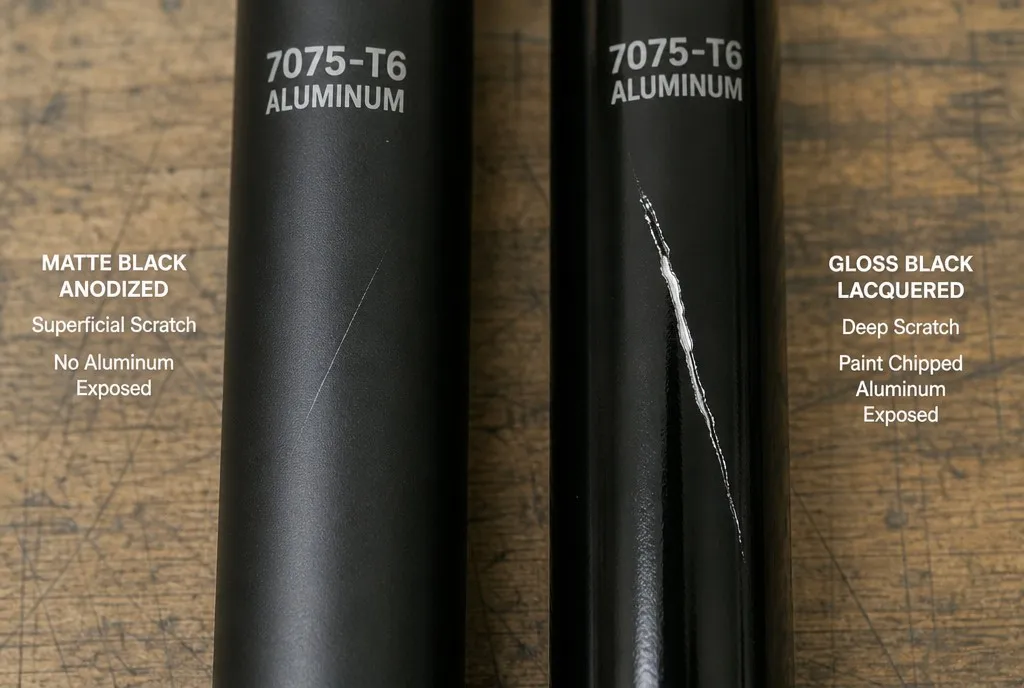
Figure 1: Standardized ISO cross-hatch scratch test. Anodized finish (Left) maintains substrate integrity; Lacquered finish (Right) chips immediately, exposing raw metal.
Anodizing: Molecular Integration
Anodizing is an electrochemical process that grows an aluminum oxide layer directly out of the base metal. Because it isn't an applied layer, it cannot peel or flake.
- Vickers Hardness (HV 300-400): The treated surface approaches sapphire-level scratch resistance, protecting against sharp scree and rocky terrain.
- Zero-Tolerance Fit: Anodizing adds just 5–15 microns of uniform thickness. This is essential for external lever locks (Flip-Locks)—painted shafts experience paint compression under lock pressure, leading to persistent shaft slippage during long hikes.
Lacquering (Spray Painting): The Low-Margin Trap
Spray painting offers quick turnarounds and unlimited color flexibility (neon, high-gloss, pastel). However, it sits on top of the metal as a surface film. Once a sharp rock pierces the paint, moisture creeps under the shell, causing corrosion and a cheapened brand perception.
2. Thermal Transfer: Capturing the $80+ Retail Tier
If your target retail price exceeds $80 USD, single-color anodizing can feel visually limited compared to premium outdoor aesthetics (wood grain, tactical camo, carbon weave). This is where Thermal Transfer Printing becomes necessary.
While thermal transfer adds roughly $0.60–$1.20 to your FOB cost, it enables natural aesthetic pairing—like pairing a wood-grain shaft with genuine cork grips—allowing retail markups that far exceed the manufacturing premium.
3. True Cost Analysis: FOB Price vs. Warranty Drag
Looking strictly at factory FOB prices is a common sourcing error. A $0.40 saving on wet paint often converts into a 3% increase in retail returns.
| Treatment Type | FOB Cost Impact | Average Return Rate | Best Target Segment |
|---|---|---|---|
| Anodizing | Baseline (Medium) | < 0.5% | Technical / Trekking ($50–$100) |
| Lacquering | -15% to -20% | 2.5% - 5.0% | Promotional / Entry Level (<$30) |
| Thermal Transfer | +25% to +40% | 1.0% - 1.5% | Boutique / Lifestyle ($80–$150) |
4. Factory Floor Checklist for Sourcing Audits
When reviewing potential OEM suppliers in Ningbo or Yongkang, request these three verifications on the factory floor:
- Environmental Compliance: Verify their anodizing line has an active local government wastewater discharge permit. Shutdowns during environmental inspections cause massive shipment delays.
- Cross-Hatch Adhesion Test (ISO 2409): Require the QC team to perform a lattice-cut tape test on sample tubes before bulk production.
- Micrometer Coating Gauge: Check wall thickness consistency across 5 points on the shaft. Variations over 5 microns on painted shafts indicate outdated manual spray booths.
Sourcing Recommendation: For long-term brand equity, treat anodizing as your baseline standard. Use thermal transfer selectively for limited-edition aesthetic lines, and limit spray painting to high-volume promotional orders where long-term durability isn't a core performance metric.
Reviewing Your 2026 Trekking Pole Specs?
We can review your current BOM and surface specs to help eliminate warranty bottlenecks before your next production run.
Request a Technical Spec Audit


댓글 0개